 Access Online ServicesAccess Online Services

After graduating from PSSD and Management Engineering, Ning Meng chose to stay in Milan and co-found 2518 Design Studio. In this interview, he reflects on health crisis, visa transitions, bureaucracy, language barriers and how PSSD helped him develop the mindset to build his own business.
Ning Meng is a PSSD alumnus from northern China and the co-founder of 2518 Design Studio in Milan. After studying Communication in China and working as a designer, he joined PSSD to build a stronger foundation in design and explore service design as a way to address more complex, real-life problems.
After completing the double degree in Product Service System Design and Management Engineering at Politecnico di Milano, Ning initially considered returning to China. However, a serious heart-related emergency became a turning point. The support he received from his current co-founder during that moment made him realise how reliable their partnership was, and this led them to start a business together in Milan.
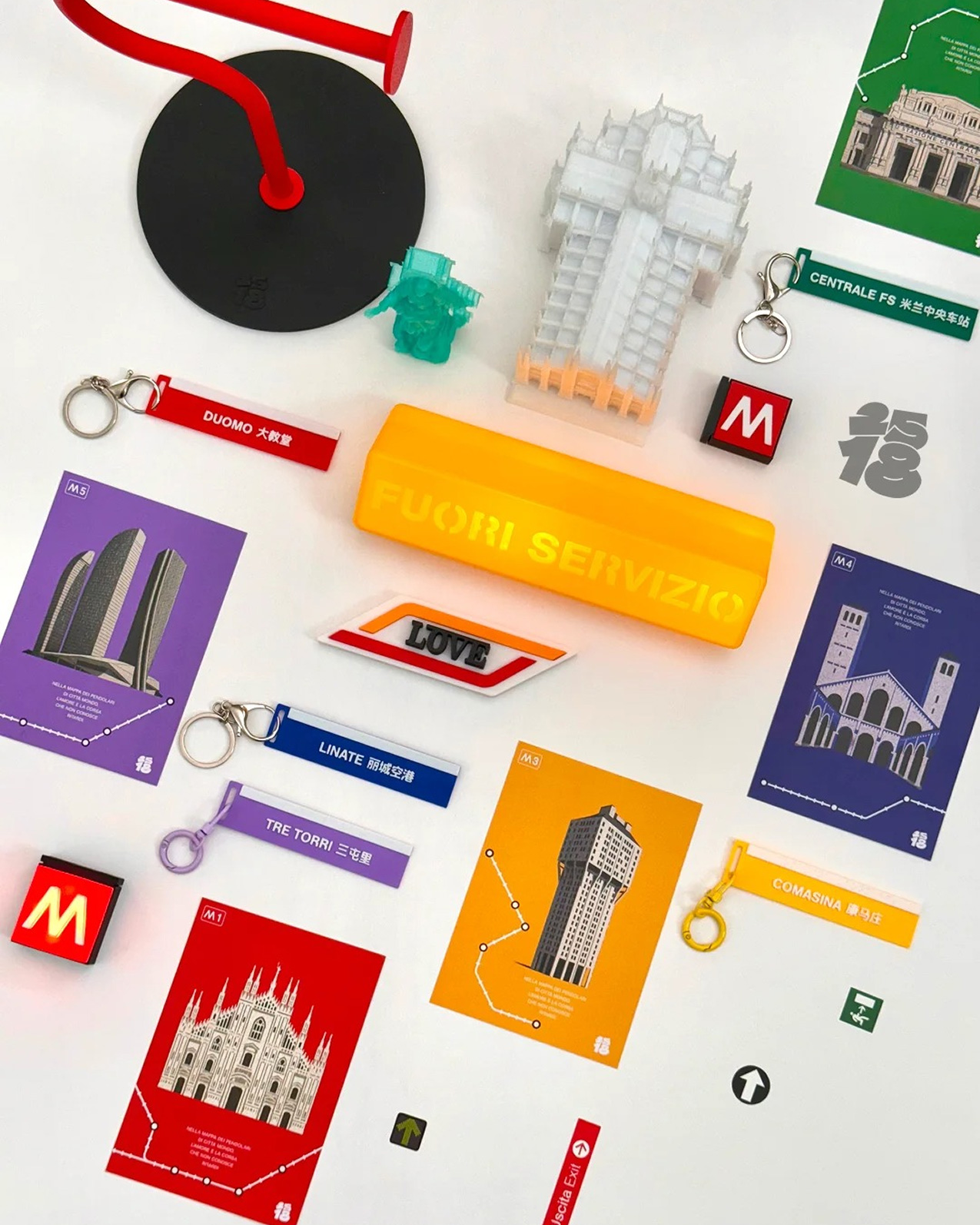
2518 Design Studio began with small, humorous design objects inspired by Milan’s metro system, which later led to exhibitions, online visibility and client projects. Today, the studio works across branding, marketing events, social media content, product design and exhibitions, especially supporting Chinese brands and organisations in communicating within the Italian market.
Ning explains that PSSD continues to influence his work through leadership, systems thinking and co-design. These skills help him manage teams, understand clients’ deeper problems and design consulting processes that turn unclear needs into clearer project briefs.
At the same time, building a business in Italy has not been easy. Ning mentions visa processes, administration, taxes, supplier relationships and language barriers as major challenges. Still, he feels satisfied with his path because he is growing, gaining more influence as a designer and building the studio’s voice step by step.
His advice to current PSSD students is to start preparing early, look for opportunities before graduation, build networks, understand the market and find a unique position. For those who want to work or start a business in Italy, he also recommends learning Italian and getting a driving licence as soon as possible.
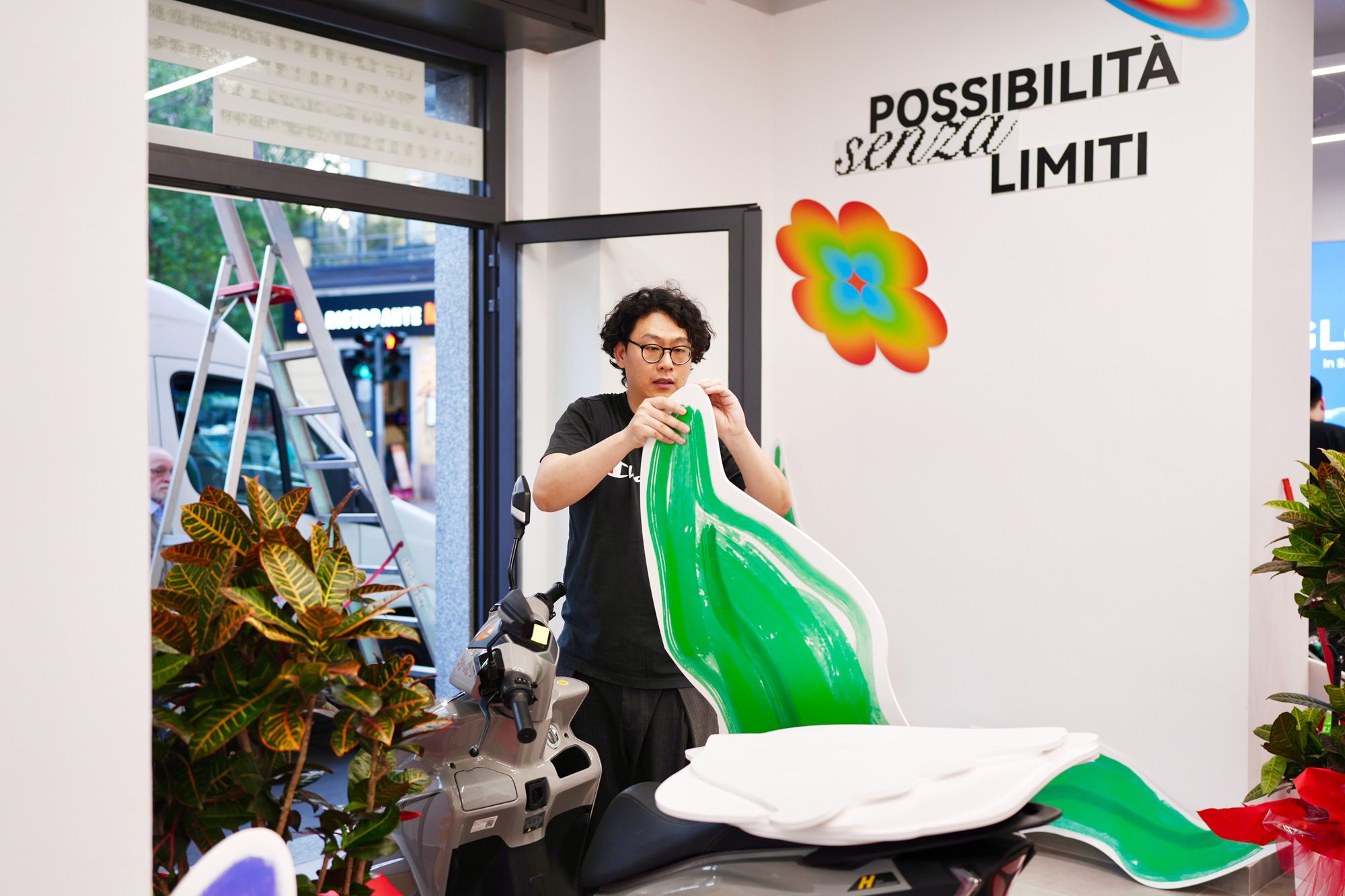
My name is Ning Meng. I am from northern China, close to Beijing. Before coming to Italy, I studied Communication in China. It was not communication design, but a field that included journalism, public relations and advertising. After my bachelor’s degree, I worked for one or two years as a designer in a companies’ marketing department.
I entered PSSD in 2020 and completed my studies at Politecnico di Milano in 2024 through the double degree programme in Product Service System Design and Management Engineering. It was a long journey. The Management Engineering part was especially difficult for me, but it also gave me different perspectives.
Now I am based in Milan, where I co-founded 2518 Design Studio with my business partner. My main role is design and management, while my partner focuses more on sales and client relationships.
I have wanted to become a designer since I was in my bachelor’s university. However, at that time, there was no option for me to change my major. After graduation, I started working as a designer, but I still felt that something was missing. I wanted to study design more seriously and build a stronger foundation as a designer.
When I discovered service design, it felt very new to me. I had worked as a graphic and visual designer, but I felt that visual design alone could not always solve real-life problems.
Service design looks at systems, frontstage and backstage relationships, customer journeys and the wider context around a problem. I found that way of thinking very powerful and interesting. I decided to join PSSD because it has a solid research foundation and a rich academic heritage in service design and its world-class professors. Plus it's Italy. I feel I can learn more.
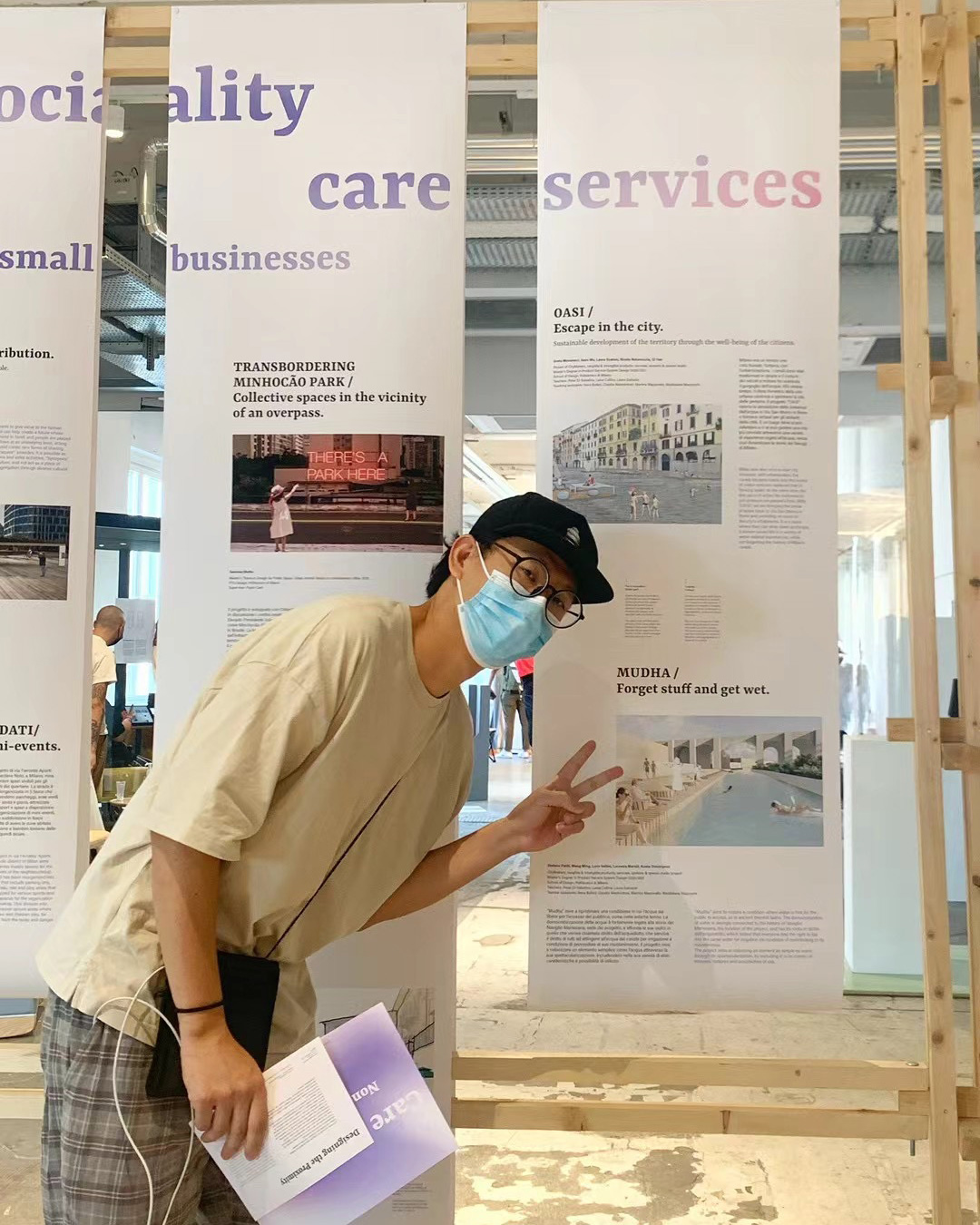
Before PSSD, I imagined that after graduation I might work as a UX designer in a large company, such as Tencent or Alibaba.
At the same time, the idea of starting my own business had always been like a seed in my heart. I always wanted to do it, but before PSSD I did not feel that it was the right timing. I had already known my future business partner through Polimi, although he studied on another campus. We had talked several times about working together and starting something, but it never felt like the right moment to fully commit.
Yes. After graduation, I actually received some offers from China, and I was considering them.
But around that time, I had a serious heart-related emergency. I almost died. I could not breathe. In that emergency moment, my current co-founder came to my place in about five minutes, took me to the hospital and handled everything.
That experience changed something for me. I felt that without him, I might not have survived. Through that moment, I realised that he was truly reliable. In a very literal sense, he became someone who saved my life. After coming back from the hospital, I felt much clearer: “Okay, let’s start our business together.”
At the beginning, we were not thinking clearly, “Let’s build a design studio.” We simply wanted to do something interesting with design.
We noticed that many people in Milan complain about public transportation, especially the metro. So we started to work with that everyday frustration in a humorous way. We created small gadgets, magnets and stickers inspired by the metro system. We shared them online and later organised a small exhibition during Design Week.
From there, people slowly began to find us. The founder of a Chinese travel application in Italy saw our online posts and events, and then asked us to create a marketing event. That opportunity led to another one.
We made something. Someone found us. A new project started. Then another person found us. The studio grew gradually through that kind of chain reaction.
We thought about competition. If we went back to China, we could probably do something and find clients. But the competition in China is extremely intense.
On the other hand, in Milan, especially within the Chinese community, we felt that we had a more specific position. We did a lot of research. We noticed that many Chinese brands want to go overseas, but there were not many strong design studios physically working in Italy while also operating between Chinese brands and the Italian market.
We felt that there was an opportunity there. For us, it was like a blue ocean.
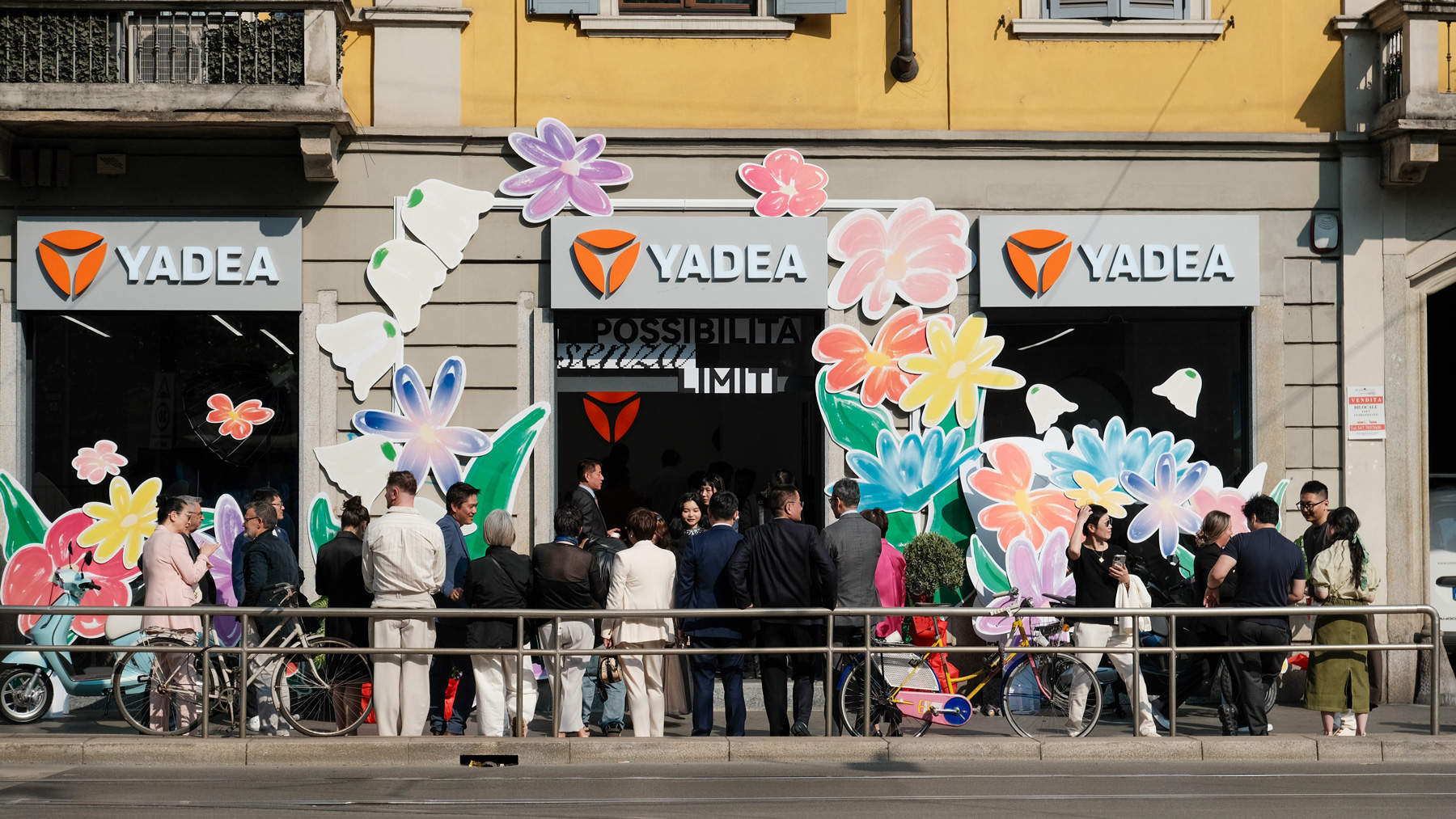
We work across marketing events, social media content, branding, product design and exhibitions. Our clients range from electric vehicles brands, restaurants, gyms and small supermarkets to larger supermarket chains and other types of organisations and brands.
A large part of our work is supporting Chinese brands and organisations in communicating within the Italian market. In that sense, our studio works as a bridge between Chinese and Italian contexts. We understand the expectations and ways of thinking of Chinese clients, while also working within the Milanese and Italian environment.
There are many things. The first one is leadership. In PSSD, you always work in teams. Sometimes you are a team member, and sometimes you become a team leader. Through that, I learned how to manage people’s work, how to assign tasks and how to work with people who have different skills.
The second one is systems thinking. I think this is really important for startups. In my current work, I need to deal with many different clients and stakeholders. Sometimes, a client's problem extends beyond just branding; it could stem from operations or management. In these moments, a system thinking allows us to better identify the root cause and provide comprehensive design recommendations.
The third one is co-design. Each client requires a different communication strategy, and many clients do not clearly know what they really want at the beginning. In our studio, I designed the first part of our process as a consulting and pre-design stage. We use research-through-design methods that I learned from PSSD. While discussing with clients, we use designed materials and processes to help them understand what they actually need. After that, we can reach a clearer brief.
This way of working is strongly connected to what I learned in PSSD.
Yes, but it was also very hard.
I am glad I did the double degree because I learned from different sides and different perspectives. Howerer, the way of thinking was closer to engineering, a bit different from my design mind. And there were written exams, oral exams and teamwork. There was a lot to handle.
The result was good for me, I think it gave me a broader perspective, but it was not an easy path.
The visa and administrative processes are complicated.
After graduation, I first changed to a job-searching permit, and after that, I changed to a self-employment permit. Now we are working through the process of registering the company as an SRL, while also exploring the possibility of becoming an innovative startup.
There are many problems in the Italian system. Everything can feel difficult, and taxes are very high. For a young business, this becomes one of the biggest barriers at the beginning.
For now, the self-employment permit is okay. But after the company is officially registered, we may need to change our visa again. That could become another problem.
Working with suppliers is a big challenge.
As a design studio, we need to work with many different providers depending on the project or event, including print factories, material factories, server providers, food providers, DJs, bands and installation providers. To get good quality and a good price, we need to build stable relationships with reliable suppliers. But because our studio is still only 1.5 years old, building those relationships takes time.
Language is also a challenge. My Italian is not good. My co-founder speaks better Italian than I do, but he is not always with me. Sometimes I need to talk with providers by myself. I can speak English, but when they start speaking Italian, it becomes difficult.
Still, it is not impossible to work in Italy without fluent Italian. We can always find solutions. But if you speak Italian, everything becomes easier.
Yes. I am satisfied.
There are many difficult moments. Sometimes unexpected things happen, and I feel scared because we are still a small team. I constantly need to learn new skills by myself. But through this process, I feel that I am growing, and I am satisfied with the results.
In many companies, designers do not always have much power. They may not have the priority or influence to change things. But in our studio, as designers, we have the power to make decisions.
Everyone in our team is a designer, and we listen to each person’s opinions. At the beginning, because our company was much smaller, our proposals did not always have enough influence. Some clients would change many parts of the work or try to design things by themselves. But step by step, we are building our influence and our voice. Now we can negotiate, discuss with clients and give opinions from a designer’s point of view. Most of the time, clients listen to us. That is a very good thing for us.
Start early. The job market is difficult now, so if you can get a job first, I think that is a good path. Do not wait until graduation. If possible, start looking for opportunities from the first year. Do not be afraid to enter the job market or try real work.
Also, build your network. Networking is important not only in Italy, but everywhere. If you know someone inside a company, or if someone recommends you, the priority of your CV can become much higher. I know it is not always fair, but it is reality.
For people who want to start their own business, my advice is to do something new. It is important to have something that makes you stand out in the market. Do not start doing something randomly. You need to research the market, understand your competitors and find your own position.
And if you want to work or start a business in Italy, study Italian. Also, get a driving licence as soon as possible. This comes from our own experience. If you work with events, factories or physical production, many of those factories are outside the city. You need to carry things and move outside Milan, and public transportation is not always enough.
I think PSSD students have the power to start their own business. The mindset we learn in PSSD is strongly connected to entrepreneurship. Think about what makes you special in the market. Do something new. Find the place where you can stand. If you can do that, I think it can work.
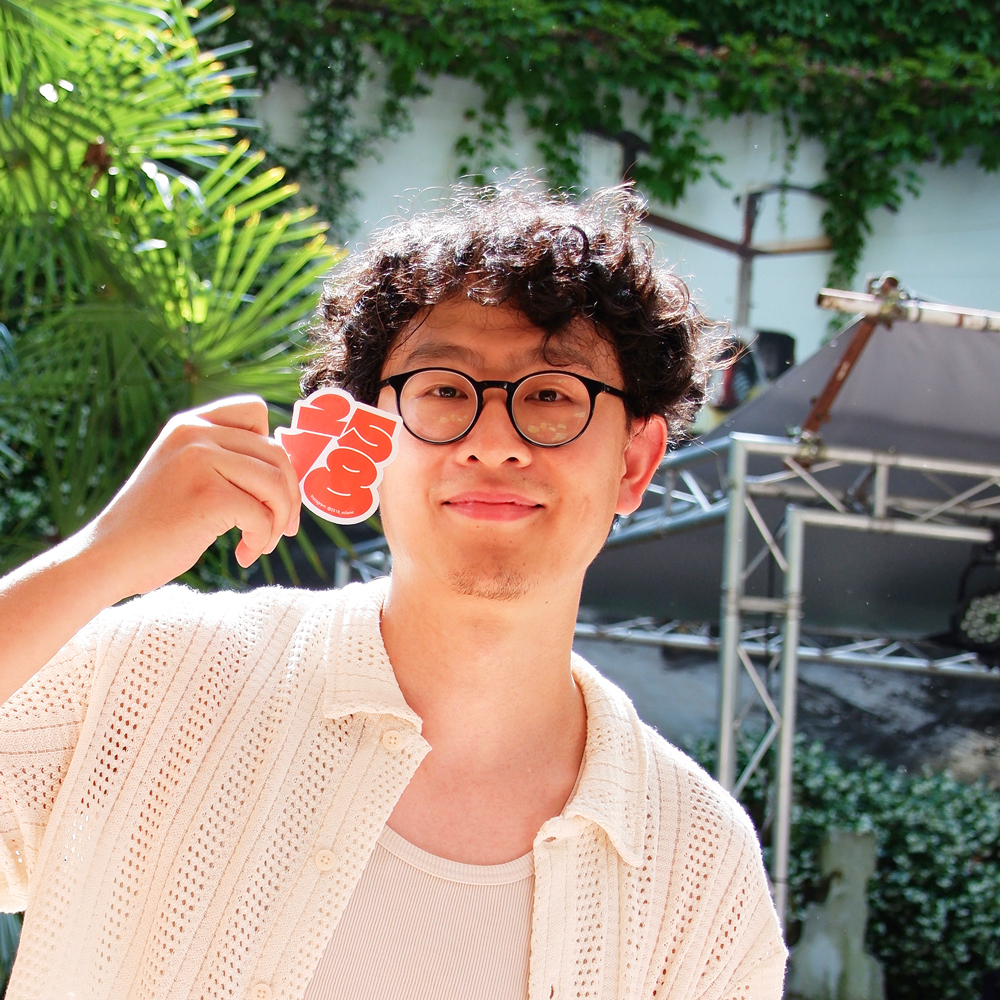
Ning Meng graduated from PSSD in 2024 and is a co-founder of 2518 Design Studio in Milan. His work bridges Chinese brands and the Italian market through branding, events, exhibitions and strategic design.
